We’re excited to share a new review from our lab that dives into a fascinating and rapidly evolving intersection of immunology, metabolism, and epigenetics.
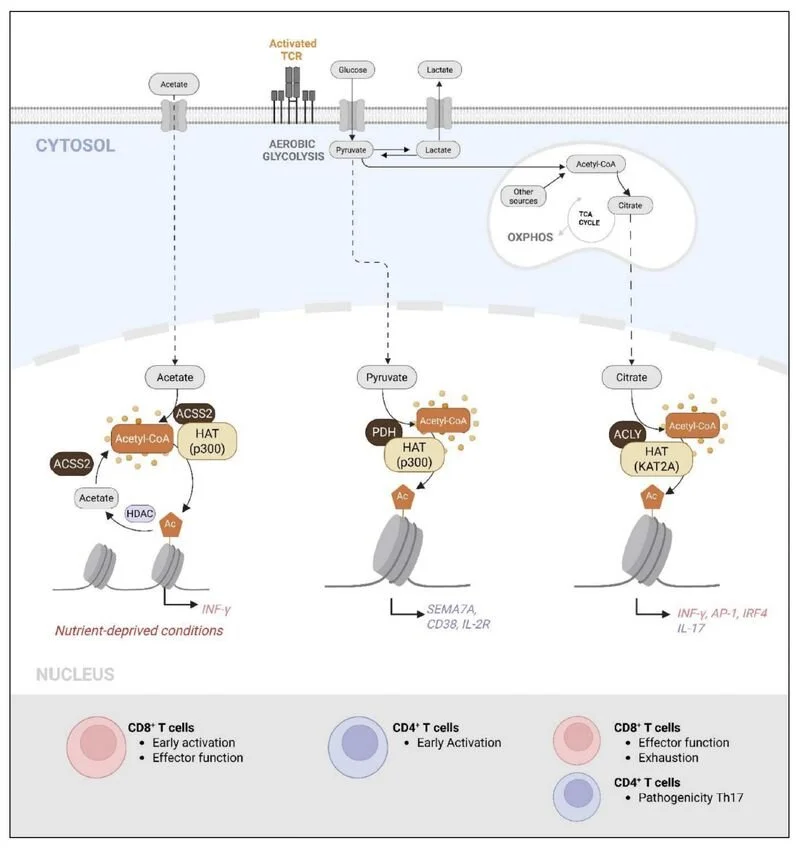
In this review, we explore how subcellular pools of acetyl-CoA, a key metabolic intermediate, help shape the functional fate of T cells. Far beyond its classical role in energy production, acetyl-CoA acts as a molecular bridge between metabolic pathways and chromatin remodeling. By generating compartment-specific acetyl-CoA (in the mitochondria, cytosol, and nucleus), T cells adapt to changing environments and maintain flexibility in activation, differentiation, and memory formation.
The review highlights emerging mechanisms by which enzymes like ACLY, PDHc, and ACSS2 translocate to the nucleus and fine-tune gene expression through histone acetylation. These findings not only enhance our understanding of T cell biology but also point to potential metabolic-epigenetic targets in autoimmune diseases, infections, and cancer.